

Mobile technology plays an important role in how businesses operate, connect with customers, and reach new goals. Apps that once served simple functions have now become powerful platforms that support customer engagement, internal operations, and sales.
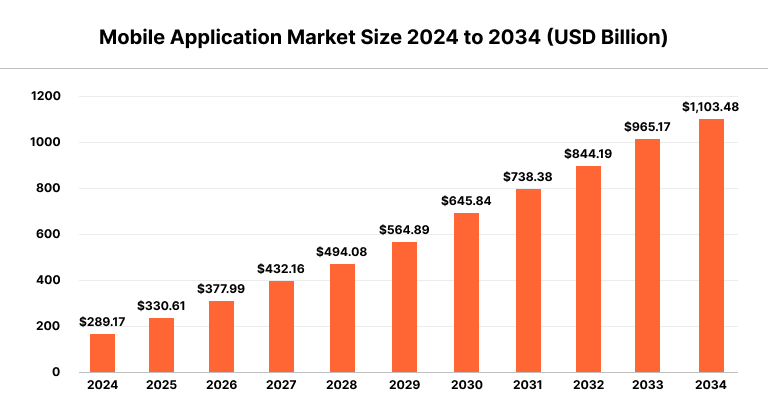
According to Precedence Research, the global mobile app market is expected to reach over USD 1,103.48 billion by 2034. This growth shows just how important mobile has become in day-to-day business strategy.
As mobile use increases, more companies are making their apps a core part of how they work and serve customers. A well-built app can improve customer satisfaction, reduce manual tasks, and support long-term growth.
So, here’s something to think about:
Is your mobile app simply functioning, or is it actively helping your business move forward?
In this article, we’ll explore the key trends in mobile app development and what businesses can do to make the most of this growing opportunity.
AI/ML-Centric Apps
AI has become a central part of mobile app development, helping businesses create smarter, more responsive experiences. According to Grand View Research, the global artificial intelligence market is expected to reach USD 1,811.75 billion by 2030, growing at a CAGR of 35.9% from 2025 to 2030. That’s a clear sign that more companies are making AI a key part of their digital strategy.
Businesses are using AI and machine learning (ML) to make apps smarter, faster, and more helpful. Here’s how:
- Apps suggest personalized content based on user behavior, interests, and past activity
- AI-powered chatbots handle customer support 24/7, answering questions instantly
- Fraud detection systems spot unusual activity to keep financial transactions safe
- Smart recommendations help users find what they need faster, improving satisfaction and sales
- Apps learn and improve over time, offering better results with each use
It’s about creating mobile experiences that feel personalized for every user. AI helps businesses save time, lower support costs, and keep users engaged.
Takeaway:
If you’re building or improving a mobile app, think about how AI can support your goals. Whether it’s through smarter recommendations, real-time support, or added security, integrating AI early can help your app stand out and grow with your business.

On-Device AI & Edge Computing
As privacy concerns grow and users expect apps to work smoothly even without internet access, more developers are choosing on-device AI and edge computing. Instead of sending every request to the cloud, apps can now process important data directly on the user’s device.
This shift brings a few big benefits:
- Faster response times because data doesn’t have to travel back and forth
- Improved privacy, since sensitive information stays on the device
- Reliable performance, even in areas with weak or no internet connection
For example, a health tracking app might analyze activity or sleep data locally before syncing to the cloud. Or a photo app might use on-device AI to enhance images instantly, without uploading them.
This approach also reduces strain on servers and can help lower operating costs for businesses.
Takeaway:
When building your app, look for ways to run key features directly on the device. Local processing keeps your app fast, private, and dependable, while still giving you the flexibility to sync with the cloud when needed.

AR/VR & Spatial Interfaces
Augmented Reality (AR) and Virtual Reality (VR) are quickly moving beyond entertainment. Businesses across industries like retail, education, healthcare, and real estate are now using these technologies to create more interactive and engaging mobile experiences.
Whether it’s trying on clothes virtually, walking through a property from home, or simulating a medical procedure, AR and VR help users see and interact with digital content in real-world settings. This level of engagement makes apps not only more fun to use but also more helpful in decision-making.
According to Fortune Business Insights, the global virtual reality market is projected to grow from USD 20.83 billion in 2025 to USD 123.06 billion by 2032, exhibiting a CAGR of 28.9% during the forecast period. This growth shows just how much potential there is for apps that offer more than just static screens.
Takeaway:
Explore how AR, VR, or spatial interfaces could add value to your mobile app. Immersive features can increase user engagement, support experiential marketing, and set your brand apart in a crowded market.

Super Apps & Ecosystem Platforms
Super apps bring multiple services together in one place. Instead of having separate apps for messaging, payments, shopping, and bookings, users can do everything within a single platform.
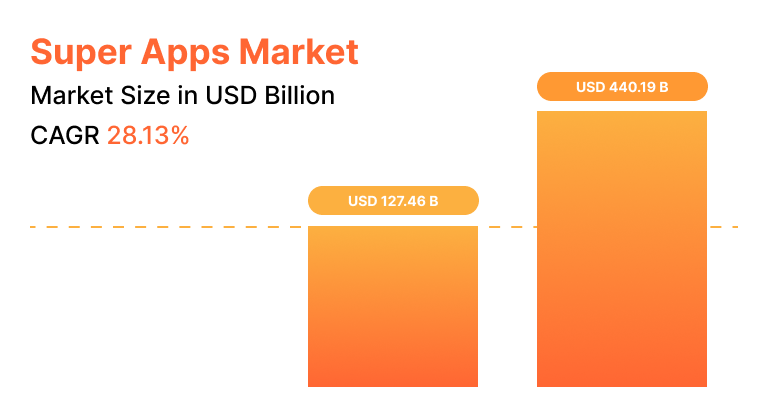
Mordor Intelligence reports the super‑apps market at USD 127.46 billion in 2025, projected to reach USD 440.19 billion by 2030 (CAGR 28.13%).
For businesses, super apps open new opportunities. It helps you to serve different needs, increase user engagement, and gather valuable insights from various user interactions. These platforms also make it easier to offer bundled services and create new revenue streams. As users look for convenience, the demand for multi-functional apps will continue to grow.
Takeaway:
Build your app in a flexible and modular way. This allows you to add more features and services over time without starting from scratch.
Voice, NLP & Conversational AI
Voice search and AI-powered conversations are changing the way people use apps. Many users now prefer speaking instead of typing, and they expect apps to understand them naturally. Features like voice search, chatbots, and virtual assistants are becoming part of everyday interactions.
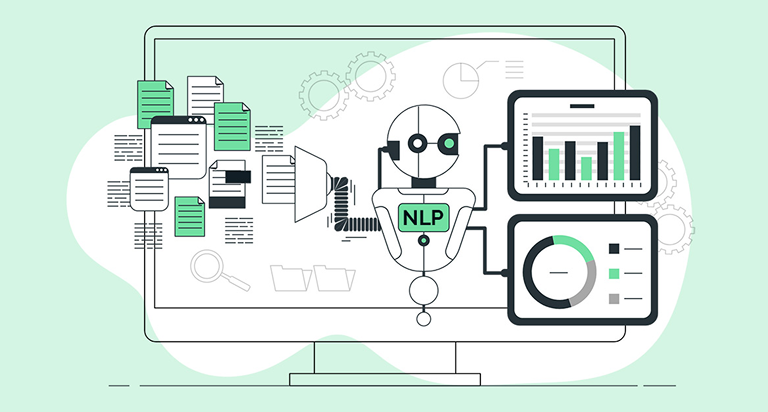
With Natural Language Processing (NLP), apps can understand user intent, answer questions, and complete tasks through simple voice or text input. These technologies not only improve user experience but also make apps more accessible and efficient.
Takeaway:
Consider adding voice features and conversational interfaces to your app. These tools can increase user engagement and make your app easier to use.
Security, Privacy & Ethical AI
As users share more data with apps, they expect that data to be handled responsibly. Security and privacy are no longer optional. Your app must comply with privacy laws like GDPR and CCPA, and you also need to consider how your AI systems make decisions.
Using strong encryption, limiting data collection, and asking for clear user consent are now standard practices. On the AI side, businesses need to think about fairness, transparency, and bias in how decisions are made, and content is shown.
Takeaway:
Make privacy and ethics part of your development process. Secure your app from the start and clearly communicate how data is used.

IoT & Cross-Device Integration
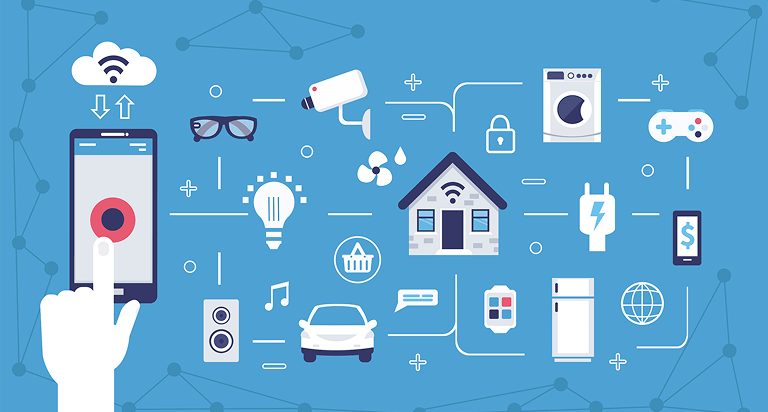
Smartphones are now control hubs for a wide range of connected devices. From smart homes and fitness trackers to medical devices and factory equipment, mobile apps are playing a key role in managing and interacting with these systems.
This expanding network of connected devices is made possible by Internet of Things (IoT) technology. As more devices connect, the need for apps that work across platforms and share data in real time is becoming more important.
Apps that support cross-device functionality provide a more complete and convenient experience for users.
Takeaway:
Build apps that can connect and sync with other devices. Cross-platform support helps your app stay useful in a connected world.
Accessibility & Assistive AI
Creating accessible apps is not just about meeting regulations. It’s about making your product usable by as many people as possible. Accessibility features like voice control, screen readers, captions, and adjustable text sizes allow people with different needs to interact with your app comfortably.
Assistive AI can also help guide users through tasks, explain complex steps, or offer voice-based support. These features improve usability for everyone, including people in challenging environments or using your app in a hurry.
Inclusive design improves user satisfaction and expands your potential audience.
Takeaway:
Design with accessibility in mind. The more inclusive your app is, the more people it can reach and serve effectively.

No-Code/Low-Code Development
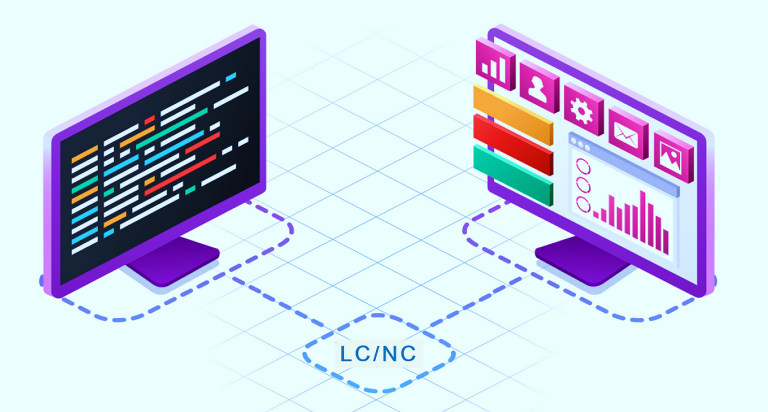
No-code and low-code platforms are helping businesses create apps quickly, especially when testing ideas or building internal tools. According to Gartner, in 2025, 70% of new applications developed by organizations will use low-code or no-code technologies, up from less than 25% in 2020.
These platforms use drag-and-drop builders, templates, and visual workflows to speed up development. They are ideal for prototypes, admin tools, or customer-facing apps that need to launch fast.
Takeaway:
Use no-code or low-code platforms to save time and move faster. They are perfect for launching minimum viable products and gathering early feedback.
UX Optimization & Real-Time Personalization
User experience is one of the biggest factors in an app’s success. If your app is slow, hard to use, or irrelevant, users will leave. On the other hand, apps that are fast, easy to navigate, and tailored to individual needs build trust and loyalty.
Real-time personalization lets your app adapt based on user actions. It can recommend content, highlight relevant features, or change the interface to match preferences. This makes the app feel more helpful and engaging.
The better the experience, the more likely users are to come back, spend more time in the app, and convert into customers.
Takeaway:
Keep improving your app’s user experience using real data. Personalized content and thoughtful design can make a big difference in how users interact with your product.
Conclusion
In 2025, mobile apps have become more powerful and helpful. They help people stay connected, complete tasks faster, and have better digital experiences.
In this article, we explored some of the major trends shaping the mobile app industry. AI is helping apps become smarter and more responsive. Voice features and chatbots are making interactions faster and easier. AR and VR are opening up new ways for users to experience products and services. Security, privacy, and ethical technology use are now key parts of app development. Tools like low-code platforms are helping businesses move faster. And accessibility features are helping apps reach more people.
These changes are not just about technology. They reflect how people’s expectations are growing. Users want apps that work well, respond quickly, and provide real value. Businesses that focus on these areas are more likely to build lasting connections with their users.
Now is the time to rethink your mobile strategy. A good app can make daily work easier, build stronger customer relationships, and support your business goals.
At Brevity Software Solutions Pvt. Ltd., we work with businesses to design and build mobile apps that are easy to use, flexible, and ready for growth. Whether you’re starting fresh or improving an existing app, we’re here to turn your ideas into a reliable, user-friendly solution.
Looking to improve your current app or build your next mobile app?
Book a consultation call!